Home/FAQ
Questions
Before you call.
The questions we get asked most, answered the way we'd answer them standing in your yard.
How long does a goatscaping project take?
It depends on density, terrain, plant type and weather, but as a working figure ten goats will clear roughly an acre of light to medium vegetation in about five to seven days. We size the herd to hit the timeline you need and give a firm estimate after walking the property.
How much does goatscaping cost?
Pricing comes from acreage, vegetation density, access and how long the herd needs to be on site. We quote after an on-site assessment, and we give you the number with and without add-on services like mulching, chipping or debris removal so you can decide what's worth it.
Will the vegetation grow back?
Some of it will, and any company promising otherwise is overselling. Goats remove top growth, not roots. What repeated grazing does is force the plant to keep spending root reserves to regrow, which weakens established invasives over time. For kudzu, privet or ivy we'll usually recommend a multi-season schedule.
Will goats remove the roots of invasive plants?
No. Goats eat above-ground vegetation. Repeat grazing weakens invasive plants over time by disrupting the regrowth cycle, but roots stay in the ground.
What exactly do the goats eat?
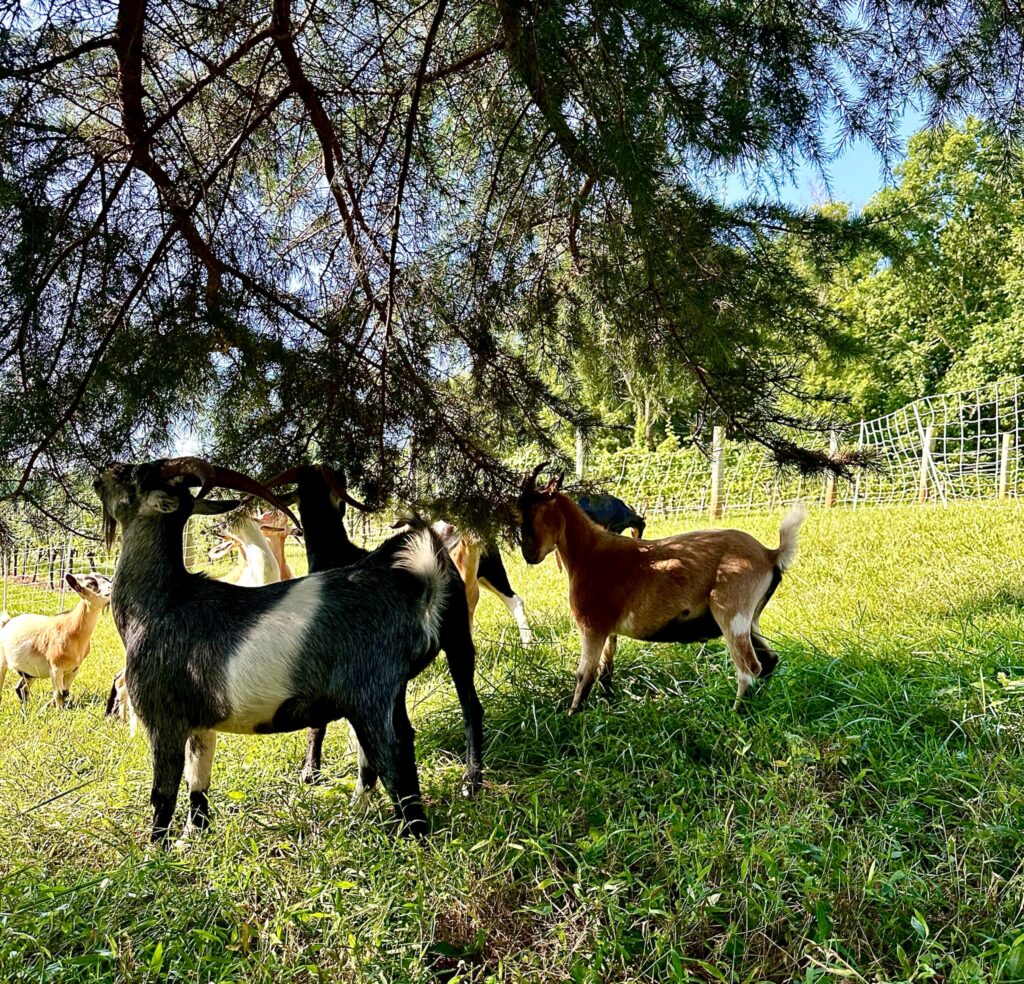
Goats are browsers, so they prefer shrubs, vines, weeds and broadleaf growth over grass. Common targets on our jobs include kudzu, poison ivy, poison oak, English ivy, honeysuckle, multiflora rose, privet, autumn olive, wisteria, oriental bittersweet, briars, blackberry, greenbrier, sumac, thistle, ragweed, sericea and saplings within browse height.
Is it safe around children, pets and livestock?
Yes. There's no herbicide involved, so there's no re-entry period and nothing toxic left behind. The herd is contained in portable electric fencing and monitored throughout. One note: goats eat poison ivy without any reaction, but the oil can transfer from their coats, so we handle the animals accordingly.
What if I have plants I want to keep?
We identify them during the assessment and fence or protect them before the herd goes in. Goats prefer shrubs, vines and broadleaf growth over grass, so lawn areas typically come through untouched.
How many goats will you bring?
It depends on the size of the job, how dense the vegetation is and the timeline agreed at the consultation. More animals compress the schedule; fewer stretch it out.
Do the goats stay overnight, and who watches them?
Typically the herd stays on site until the job is finished, unless weather, predator pressure or an animal's health says otherwise. We check them in person on a regular schedule and can set solar-powered cameras for remote monitoring. On large or distant projects we can station someone with the herd full-time.
How do you keep the goats contained?
Portable electric fencing powered by a solar panel, set around the section being grazed and moved forward as areas are finished. The goats and the guardian dogs are trained to the fence and respect it. Nothing draws power from your property.
Do I need to provide power, water or site preparation?
No. Fencing runs on solar, we bring water if the site doesn't have a usable source, and we handle delivery, setup and removal. If debris or trash is blocking access, that's an add-on we can scope during the estimate.
Do I need to be home?
No. Many customers enjoy watching the goats work, but nothing is required of you during the project.
What if I have a dog?
Many dogs coexist fine with the herd, but some need to be kept indoors or leashed while the goats are on site. We'll talk it through before we start.
Do the goats smell or make a lot of noise?
Not really. Goats are quiet and low-odor animals. Breeding males during mating season are the exception, and even then the odor is only noticeable up close. You'll hear occasional bleating — most people find it pleasant rather than disruptive.
Can goatscaping help with wildfire prevention?
Yes. Grazing reduces dry brush and fine fuels, which is a recognized way to create defensible space around homes and buildings.
Can I interact with the goats?
As much or as little as you like. Some customers want to know every animal by name; others just want the ground cleared. We're happy either way.
What types of property do you work on?
Everything from a small residential yard to large commercial and conservation acreage. Grazing is especially useful on steep slopes, woodland understory, sites near water and anywhere machinery would do more harm than good.
How far will you travel?
Most of our work sits within about an hour of Elkin, and we regularly go further — Winston-Salem, High Point, Hickory, Statesville, Mooresville and the Lake Norman area are all routine for us. Whether an on-site visit is free depends on the drive and the size of the job, and we'll tell you that on the phone before anyone gets in a truck. Further out than that? Still call. Bigger projects justify a longer haul.
How do I get started?
Call (336) 502-4628 or send the estimate form on our contact page. We'll visit the property, assess the vegetation, discuss your goals and tell you honestly whether grazing is the right approach.
Ready when you are
Still have a question?
Call us. It's usually a two-minute conversation.