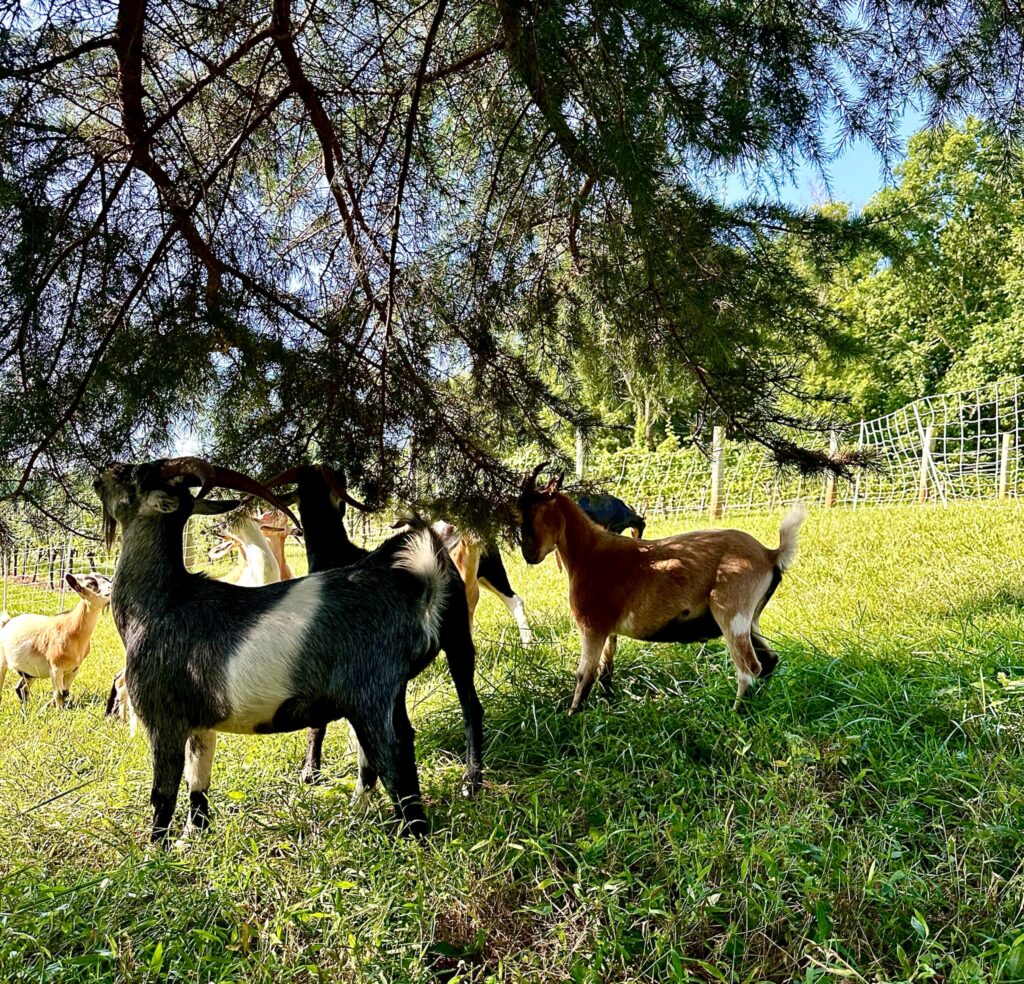
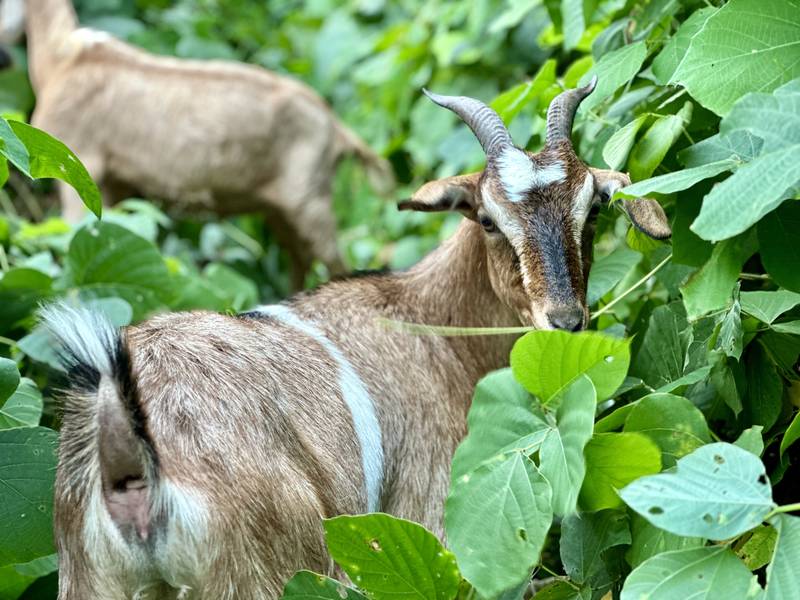
Invasive vines
Kudzu, English ivy, wisteria, honeysuckle and oriental bittersweet pulling down trees and fence lines.
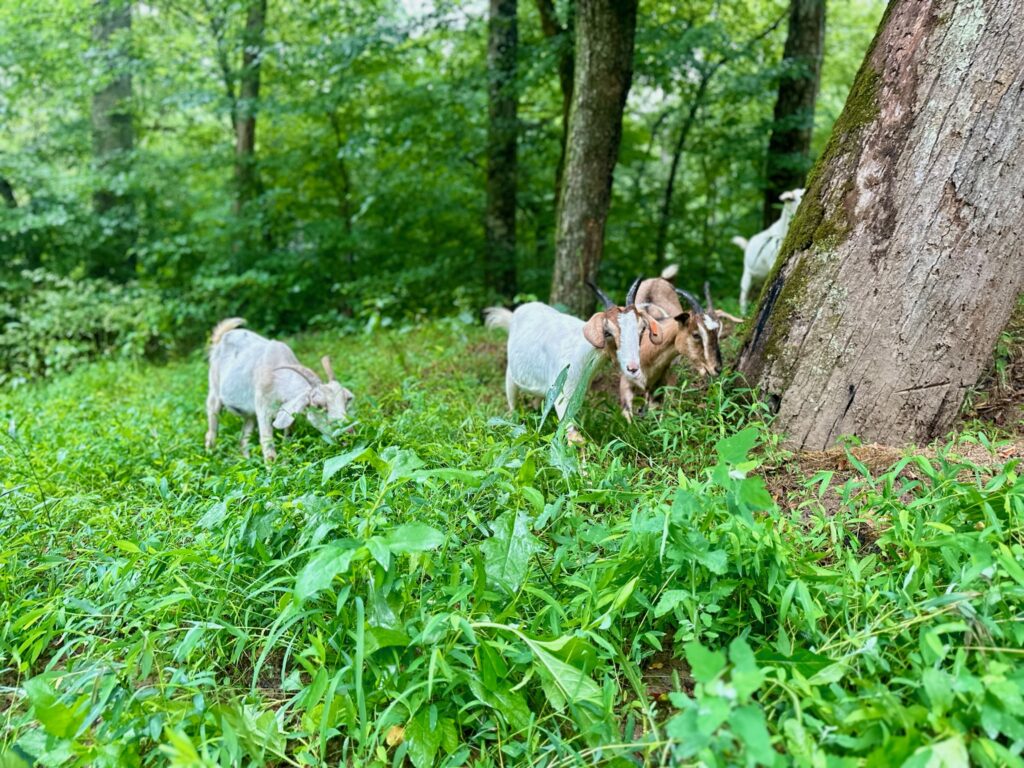
Goatscaping & targeted grazing · North Carolina
We bring a working herd to land that machinery can't reach — kudzu, English ivy, poison ivy, honeysuckle, briars and heavy brush on slopes, woodlots and commercial acreage across central and western NC. The herd is held with portable solar-powered netting or Nofence GPS collars, whichever suits the ground, and guardian dogs come along where a site calls for them.
Custom grazing plans · Residential through commercial acreage
What we're called for
Steep, wooded, tangled, or too close to water and structures for a machine. Goats get in, work it down, and leave the soil intact.
Kudzu, English ivy, wisteria, honeysuckle and oriental bittersweet pulling down trees and fence lines.
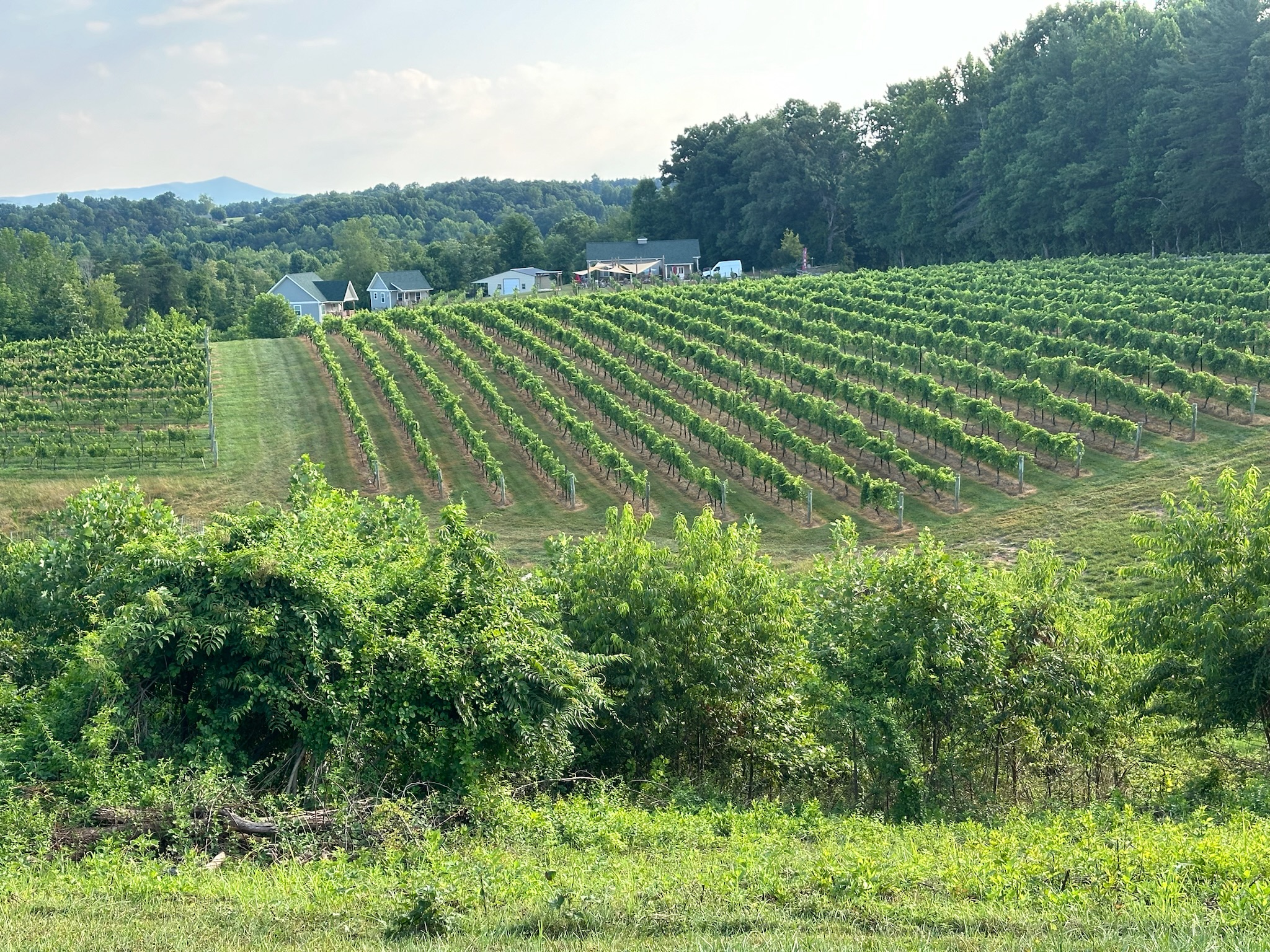
Grades that are unsafe for mowers and skid steers. Goats climb them without rutting or eroding the hillside.
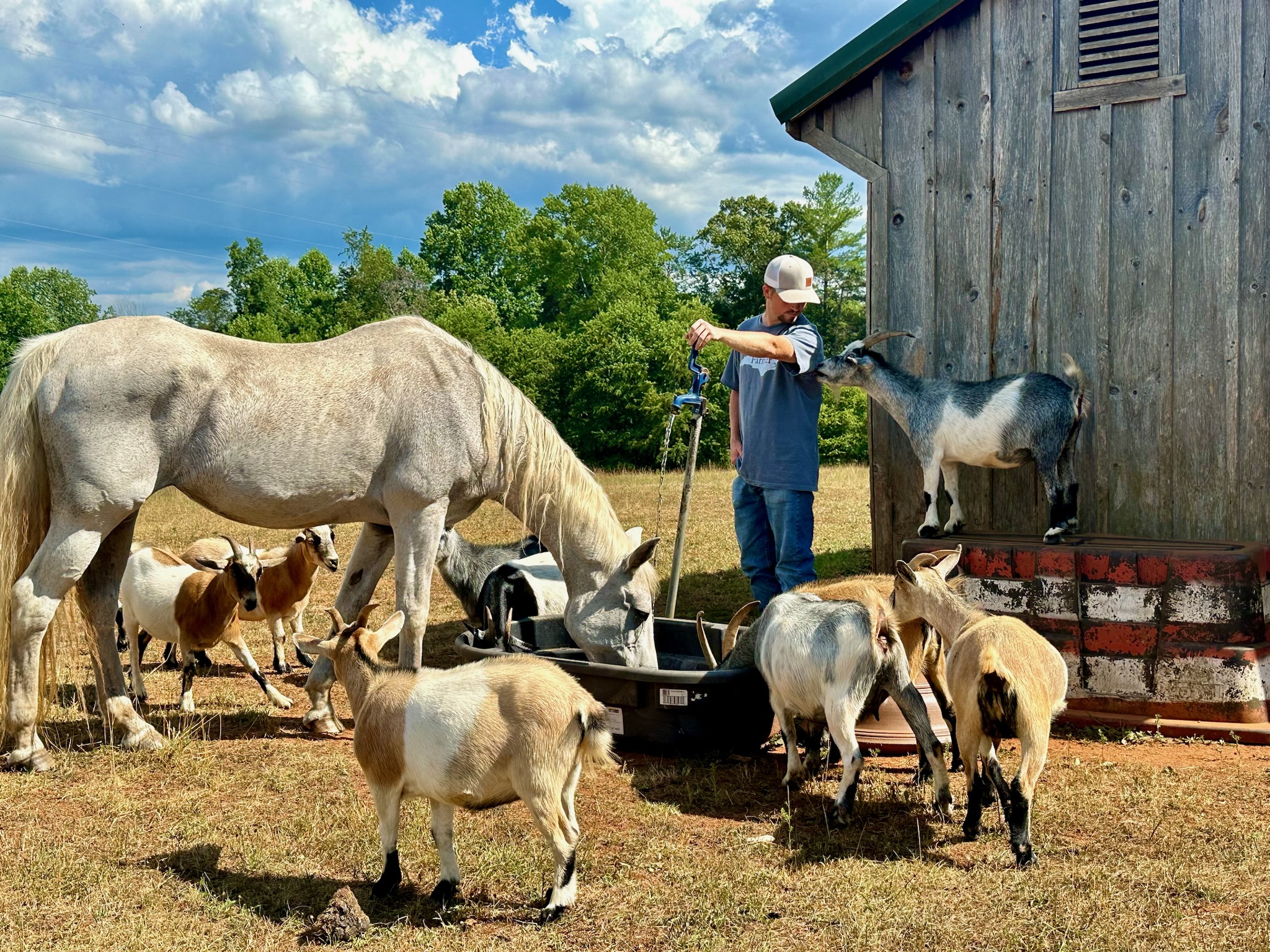
Brush, briars and saplings choking the understory — cleared without taking down the canopy you want to keep.
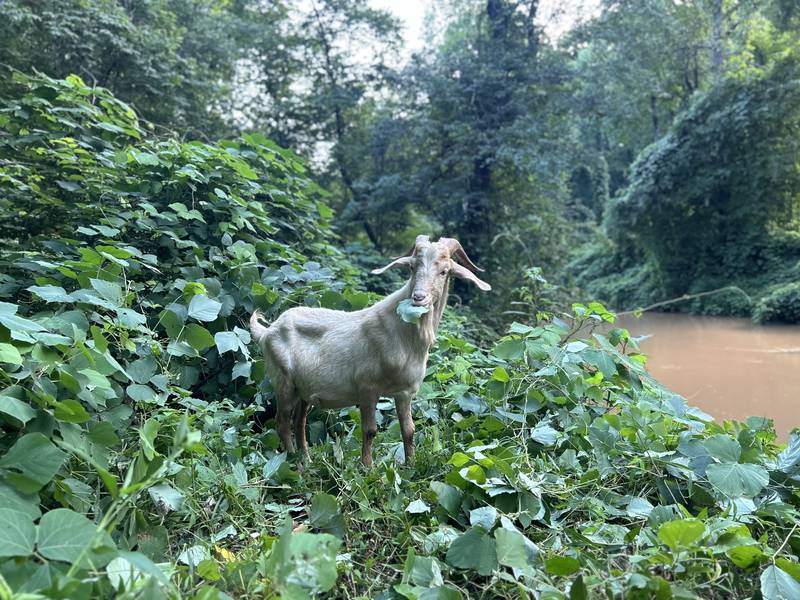
Shorelines, stream buffers and treelines where herbicide drift is a problem and equipment would tear up the bank.
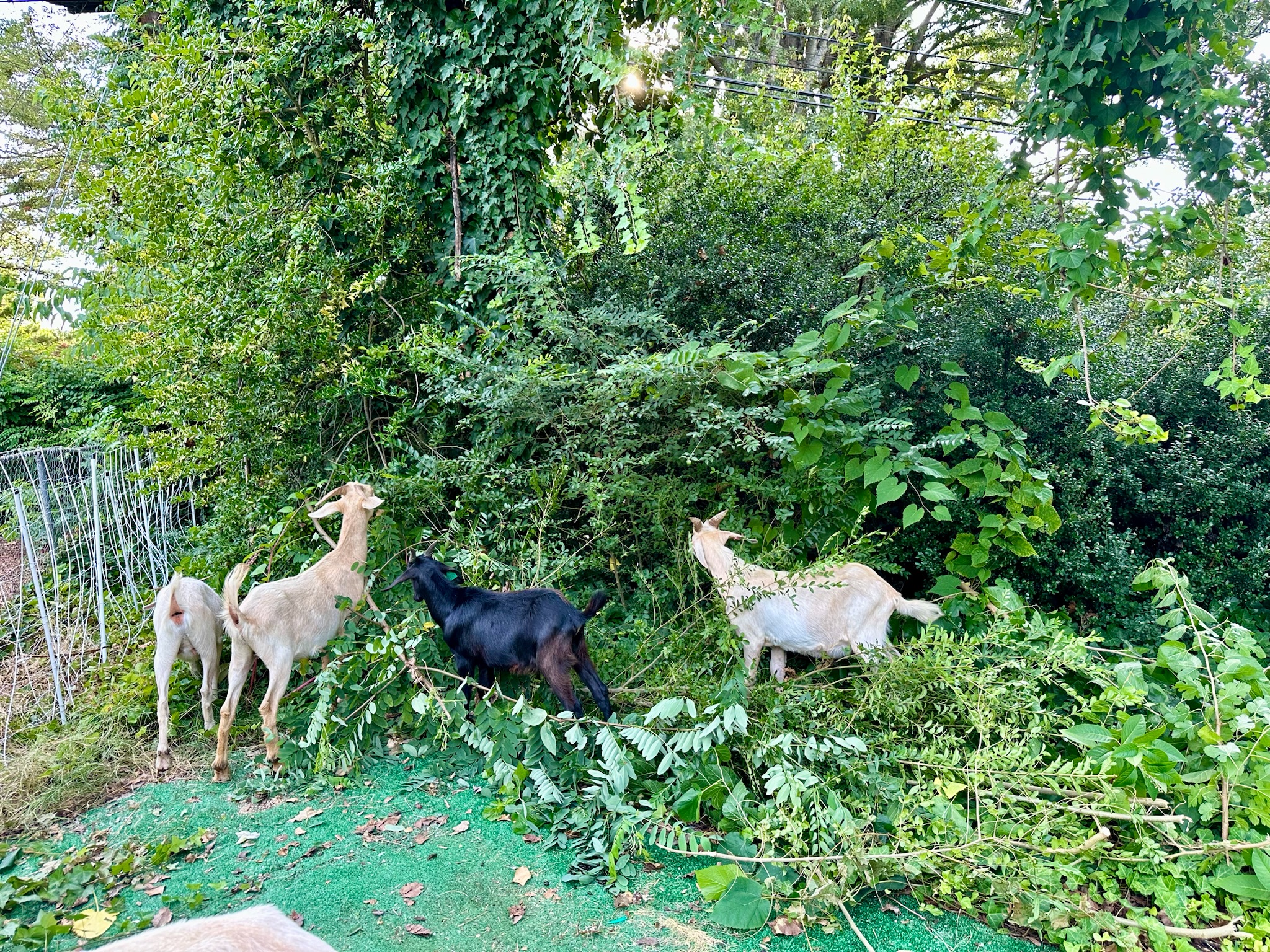
Properties that have gone years without maintenance and need to be opened back up before anything else can happen.
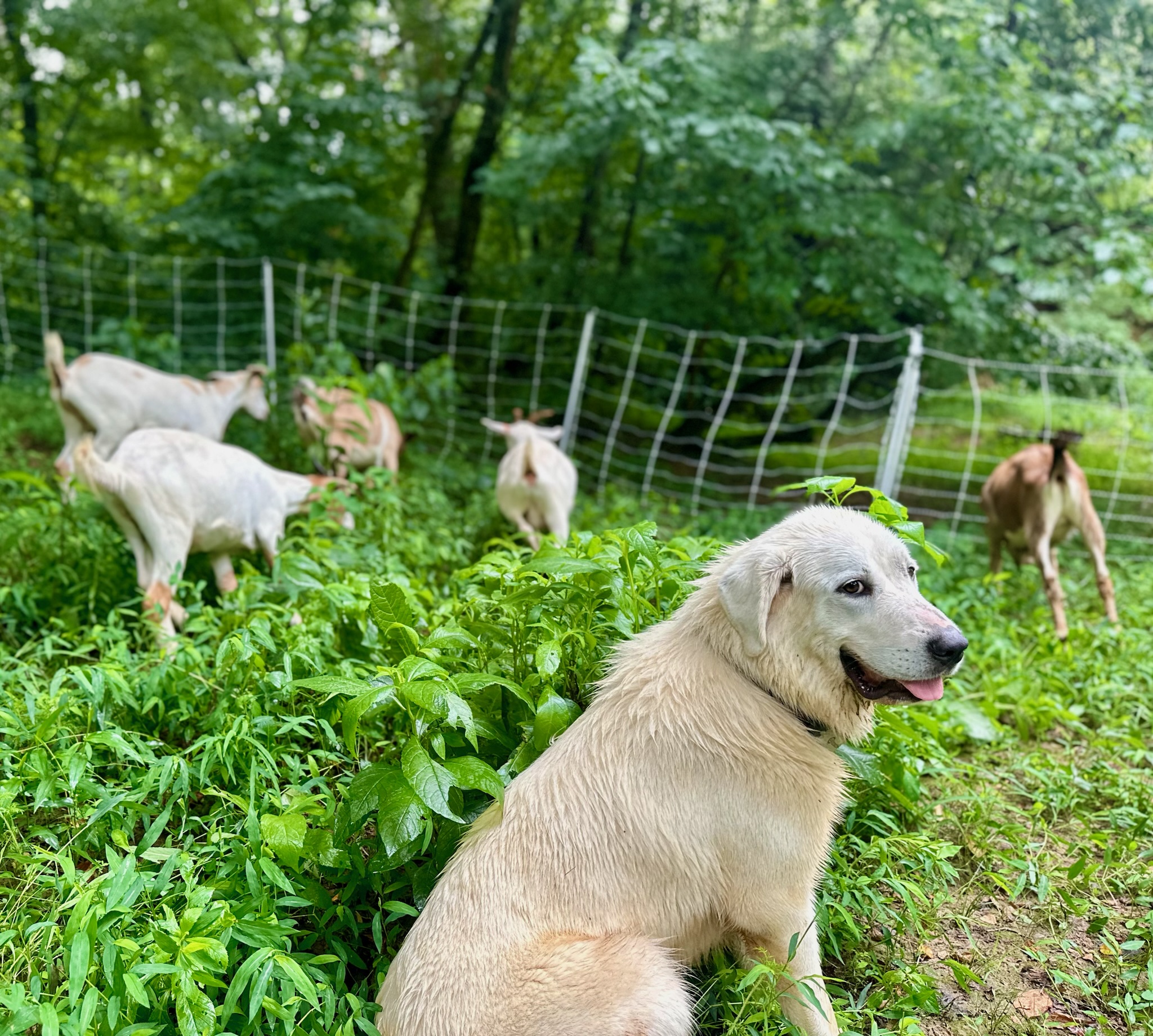
Watersheds, schools, conservation land, organic farms and homes where reducing herbicide use is the whole point.
Why goats
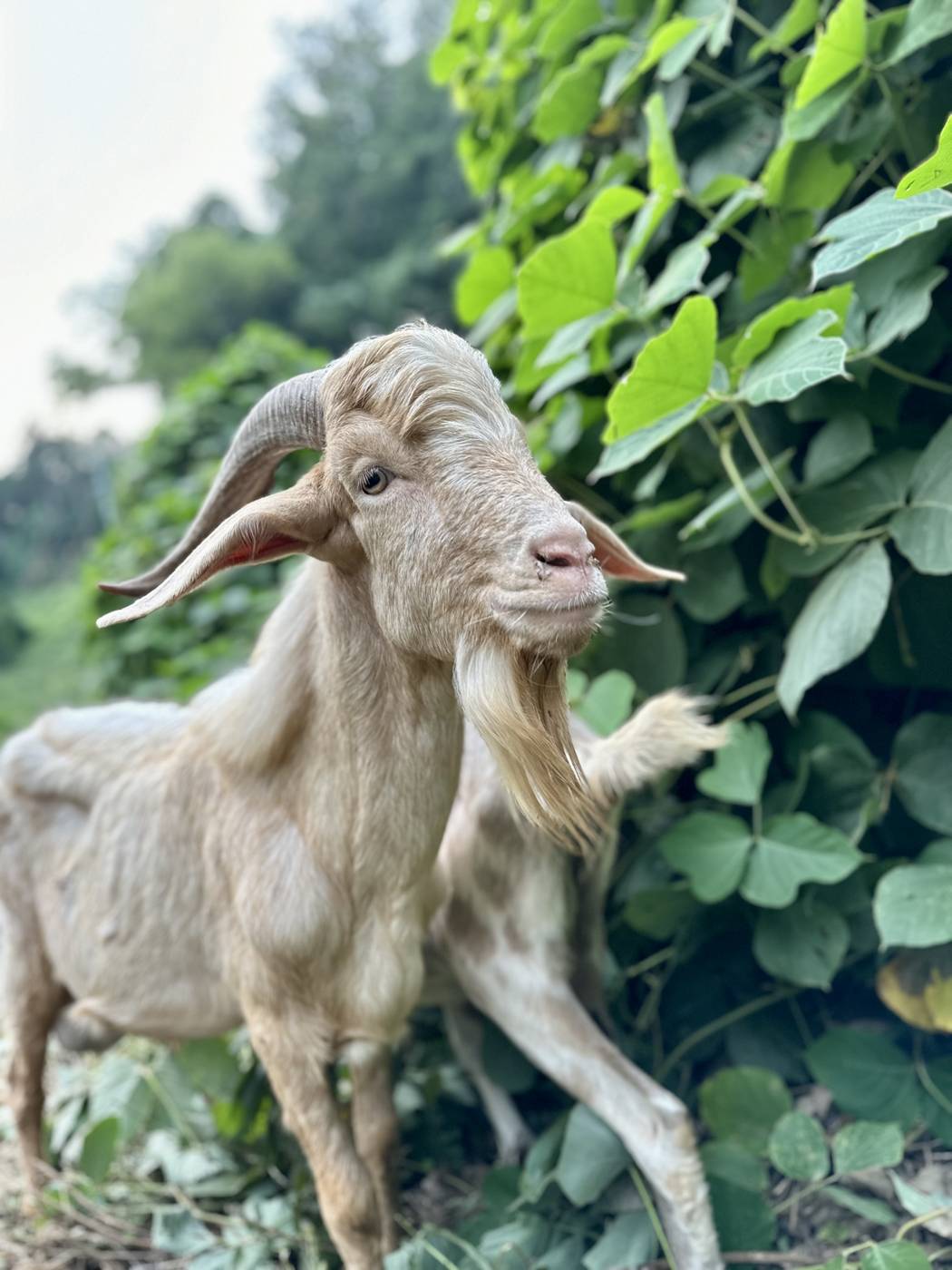
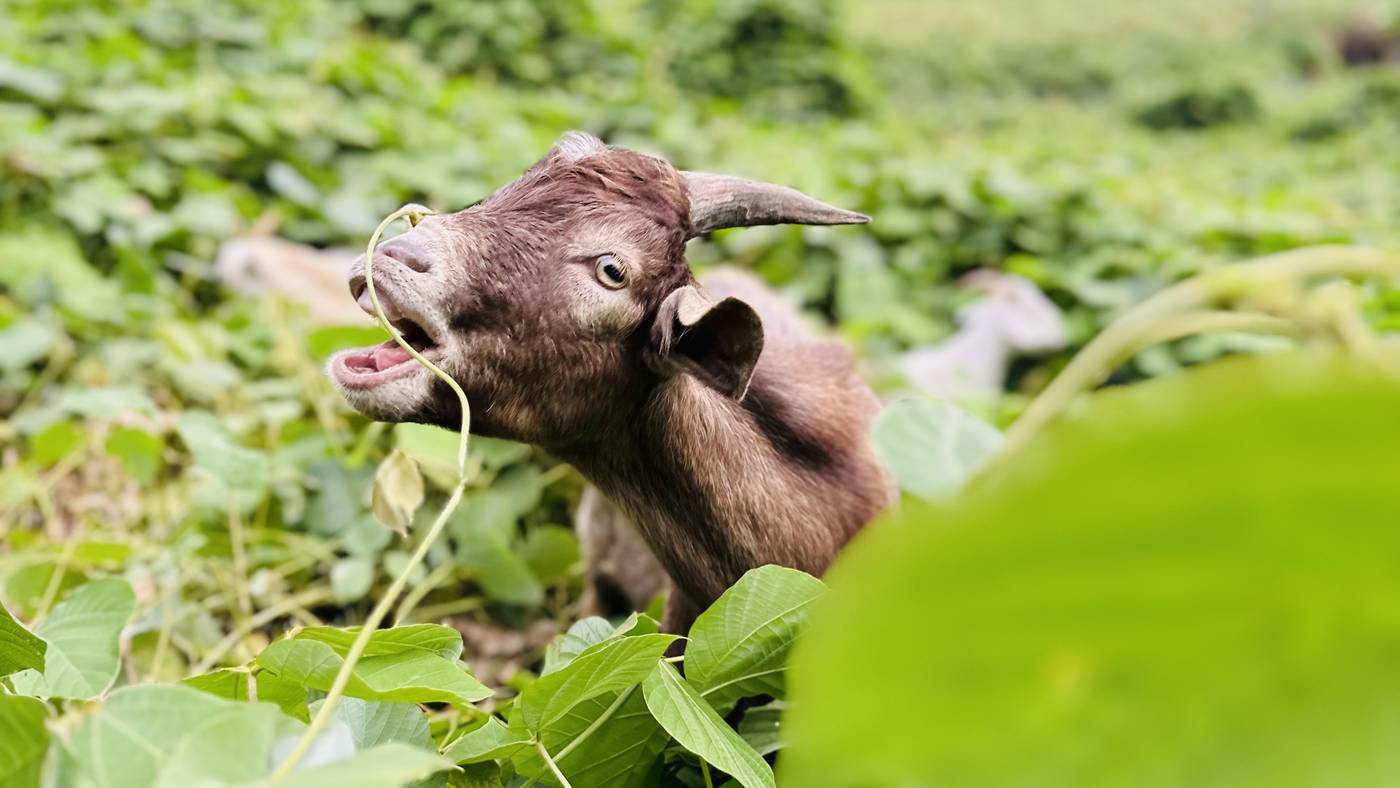
Goats are browsers by preference — they go after shrubs, vines and broadleaf growth before they touch grass. That's exactly the wrong-way-round appetite that makes them useful on a property that has a brush problem rather than a lawn problem.
Slopes, gullies, rock, wet edges and dense understory — no ruts, no compaction, no erosion scar left behind.
Grazing replaces or reduces spray on sites where drift, runoff, kids, pets or livestock make chemicals a liability.
Removing top growth again and again forces a plant to spend root reserves it can't easily rebuild. That's how suppression actually works.
We size the herd and section the work to the acreage, density and timeline — not the other way around.
Straight talk
We'd rather set the right expectation up front than sell you a result we can't produce. Here's the honest version.
Field index
A working list of what our herd browses on North Carolina properties. Persistent invasives are marked — those are the ones that usually need more than one grazing to stay knocked back. English ivy stays green all winter, so ivy work carries on through our quieter months.
Have something not on this list, or plants you specifically want protected? We identify both during the site assessment and fence or cover anything worth keeping.
Results
Every photograph on this site is from an actual Eco Grazers project or from our own herd. This is the same roadside bank in Dobson, photographed from the same spot two months apart.
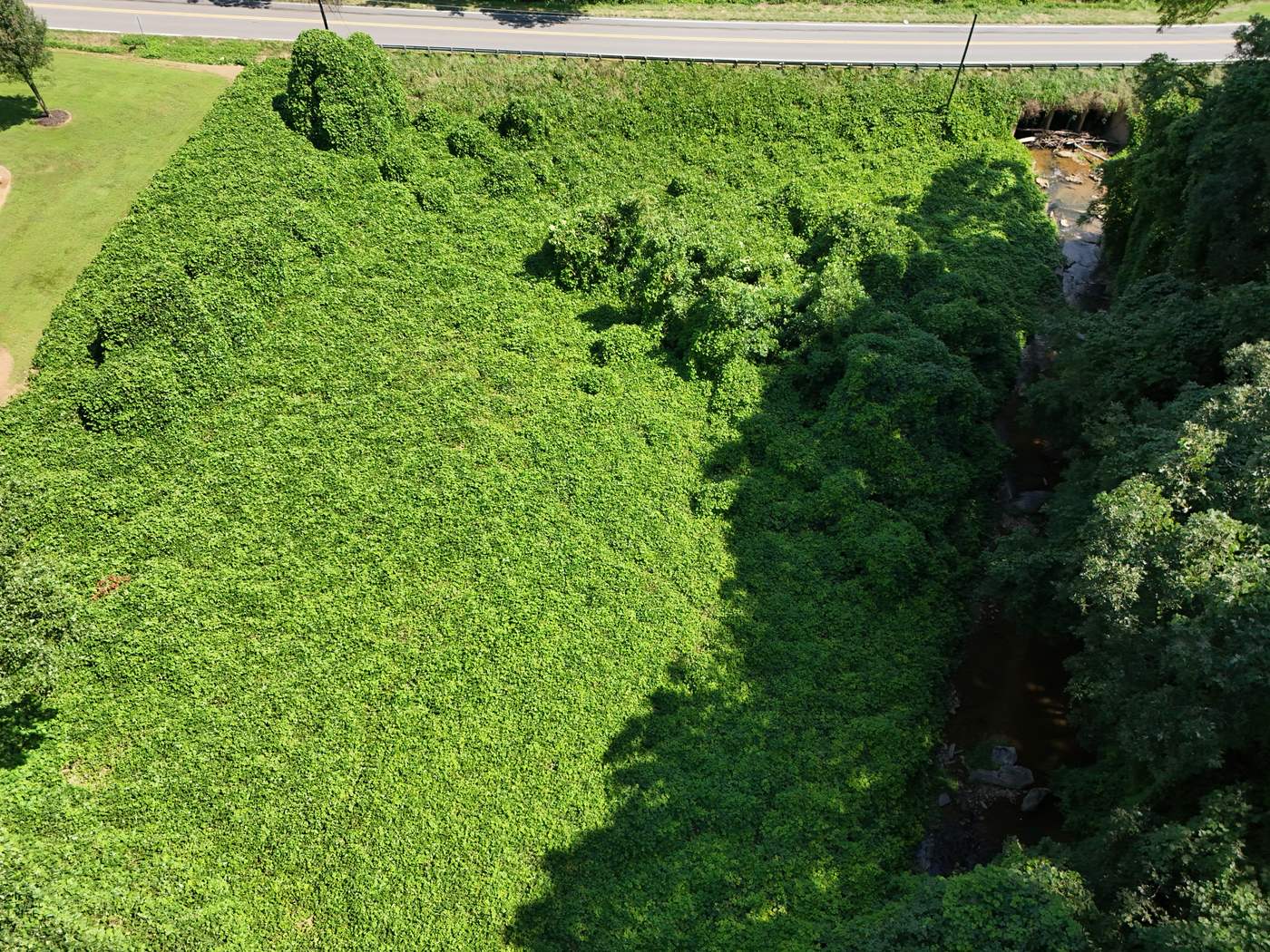
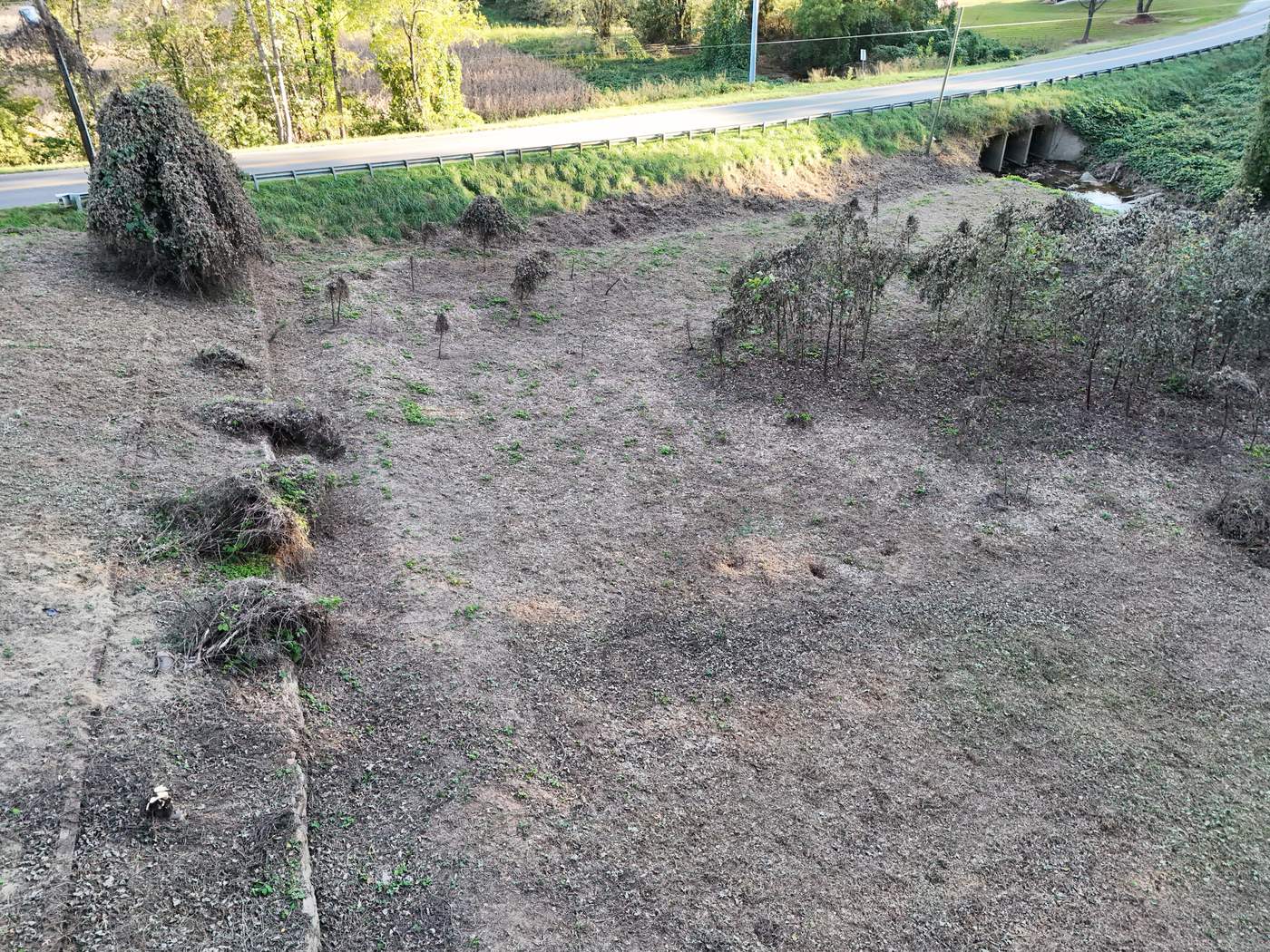
Dobson, NC · August–October 2024. Drone photos taken from the same position, two months apart.
How a project runs
You don't need to prepare the site, provide power, or be home while the goats work. We handle setup, containment, monitoring and removal.
Tell us the address, rough acreage, and what's growing. Photos help. We'll respond with next steps and a visit time.
We walk the property: vegetation type and density, terrain, access, water, fencing needs, plants you want protected, and your goals.
Herd size, grazing sections, containment, estimated duration, logistics and whether mulching, chipping or debris removal belongs in the scope.
We deliver the herd and set the boundary — portable solar-powered netting, or Nofence GPS collars where netting isn't practical. Cameras and guardian dogs are added when a site calls for them.
The herd browses the targeted vegetation down. On large jobs we section the property and move fencing forward as each area is finished.
Equipment and animals come out. For established invasives we'll recommend a repeat-grazing schedule so the gains hold.
Containment
Most projects run on portable solar-powered electric netting. But netting has to be carried in, set up and moved — which quietly rules out a lot of ground: long ridgelines, rough terrain, wet edges, and sites where hauling fence in isn't practical.
We also run Nofence GPS virtual fencing. The herd wears solar-powered GPS collars, and the grazing boundary is drawn on a map in an app rather than built on the ground. As an animal nears the line, its collar gives an audio warning; it learns the boundary during a training period before any of this goes to work on a customer's property.
For you, it means three things: we can take on sites where physical fencing was the obstacle, we can adjust the grazing area in minutes instead of a day of fence-moving, and we know where the herd is at all times.
It isn't magic — it needs cell coverage on site, and there's a margin of error of a few yards on any GPS boundary. Where a hard physical line matters, near a road or a property edge, we still use netting, or both together. We pick the containment to the site.
Who we work for
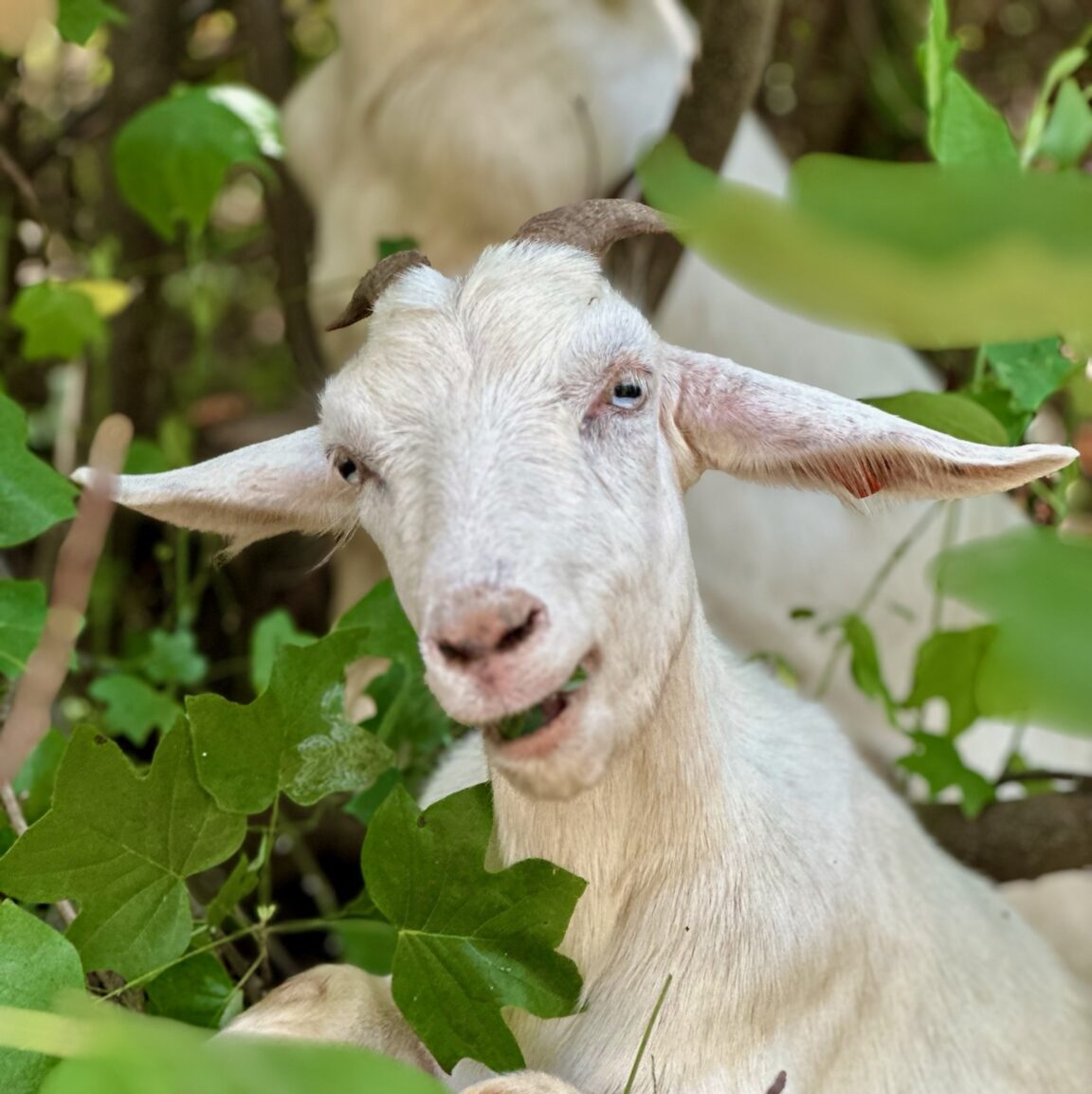
Homeowners & small acreage
If your back bank has gotten away from you, or there's poison ivy where the kids play, grazing is often cheaper and far less disruptive than clearing it by machine.
HOAs · Property managers · Municipalities
We work at acreage scale with written scopes, sectioned grazing plans and monitoring — the documentation a board, supervisor or procurement office needs to sign off.
Behind the herd
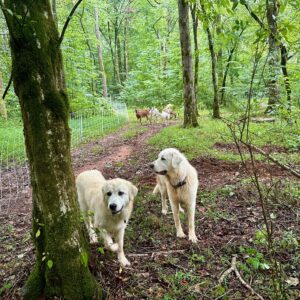
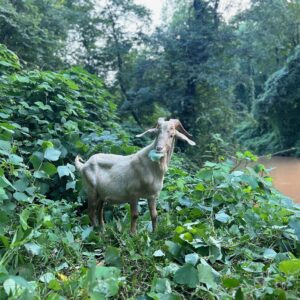
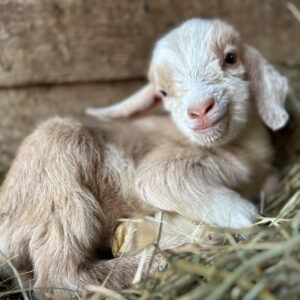
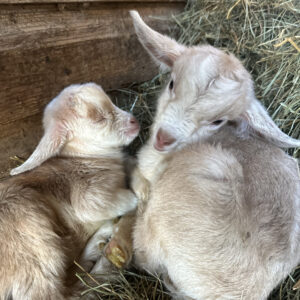
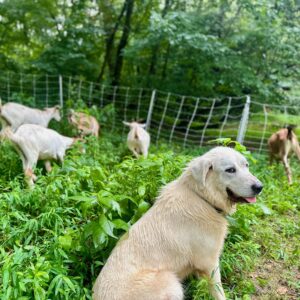
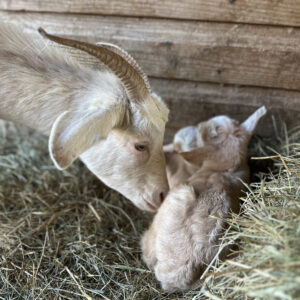
The herd lives on an 88-acre farm between projects — pasture, woods, riverbank and hill ground. The animals are cared for personally, not contracted out, and the grazing side of every project is run by the same people who look after them day to day. Merry and Denali, our Great Pyrenees, go out with the herd on projects where predator pressure or isolation calls for it.
Where we work
We're based in Elkin and cover the Triad, the Yadkin Valley, the foothills and the Lake Norman region most weeks — and we travel further when a project justifies it. Whether there's a charge for the visit depends on the drive and the job, and you'll know before we set a date.
Also serving Yadkinville, North Wilkesboro, Jonesville, Dobson, King, Kernersville, Lewisville, Advance, Troutman, Taylorsville and surrounding communities.
Questions
It depends on density, terrain, plant type and weather, but as a working figure, ten goats will clear roughly an acre of light to medium vegetation in about five to seven days. We size the herd to hit the timeline you need and give you a firm estimate after walking the property.
Pricing comes from acreage, vegetation density, access and how long the herd needs to be on site. We quote after an on-site assessment, and we give you the number with and without add-on services like mulching, chipping or debris removal so you can decide what's worth it.
Some of it, yes — and any company that promises otherwise is overselling. Goats remove top growth; they don't remove roots. What repeated grazing does is force the plant to keep spending root reserves to regrow, which weakens established invasives over time. For kudzu, privet or ivy we'll usually recommend a multi-season schedule.
Yes. There's no herbicide involved, so there's no re-entry interval and nothing toxic left behind. The herd is contained in portable electric fencing and monitored. If you have a dog, we'll talk through whether it needs to be kept in or leashed while the goats are on site.
We identify them during the assessment and fence or protect them before the herd goes in. Goats prefer shrubs, vines and broadleaf growth over grass, so lawn areas typically come through untouched.
Typically the herd stays on site until the job is finished, unless weather, predator pressure or an animal's health says otherwise. We check them in person on a regular schedule and can add solar-powered cameras for remote monitoring. On large or distant projects we can station someone with the herd full-time.
No. Fencing runs on solar, we bring water if the site doesn't have a usable source, and we handle setup and removal. If debris or trash is in the way, that's an add-on we can scope during the estimate.
Most of our work sits within about an hour of Elkin, and we regularly go further — Winston-Salem, High Point, Hickory, Statesville, Mooresville and the Lake Norman area are all routine for us. Whether an on-site visit is free depends on the drive and the size of the job, and we'll tell you that on the phone before anyone gets in a truck. Further out than that? Still call. Bigger projects justify a longer haul.
Ready when you are
An on-site assessment, a written plan, and an honest answer about whether grazing is the right tool for your site.